A Skilled Workforce is Key to Transition to Electrification

Based on our longstanding commitment to build products close to our customers, our current and future U.S. workforce will play a central role in our vision to make 100% of our vehicle sales electrified by 2040. In fact, I’d argue that to transition to an electrified auto industry, our most important investment will not be in technology, but in our people.
Production of battery-electric vehicles – EVs – will require that our workforce have both traditional skills such as vehicle assembly as well as new skills like electrical equipment assembly. This challenge will involve providing our current associates with training in new processes and production technologies, as well as hiring a next-generation workforce equipped to work in what will be an advanced-technology environment. We will need to succeed on both fronts to transition from the world’s largest manufacturer of internal combustion engines to a manufacturer of EVs.
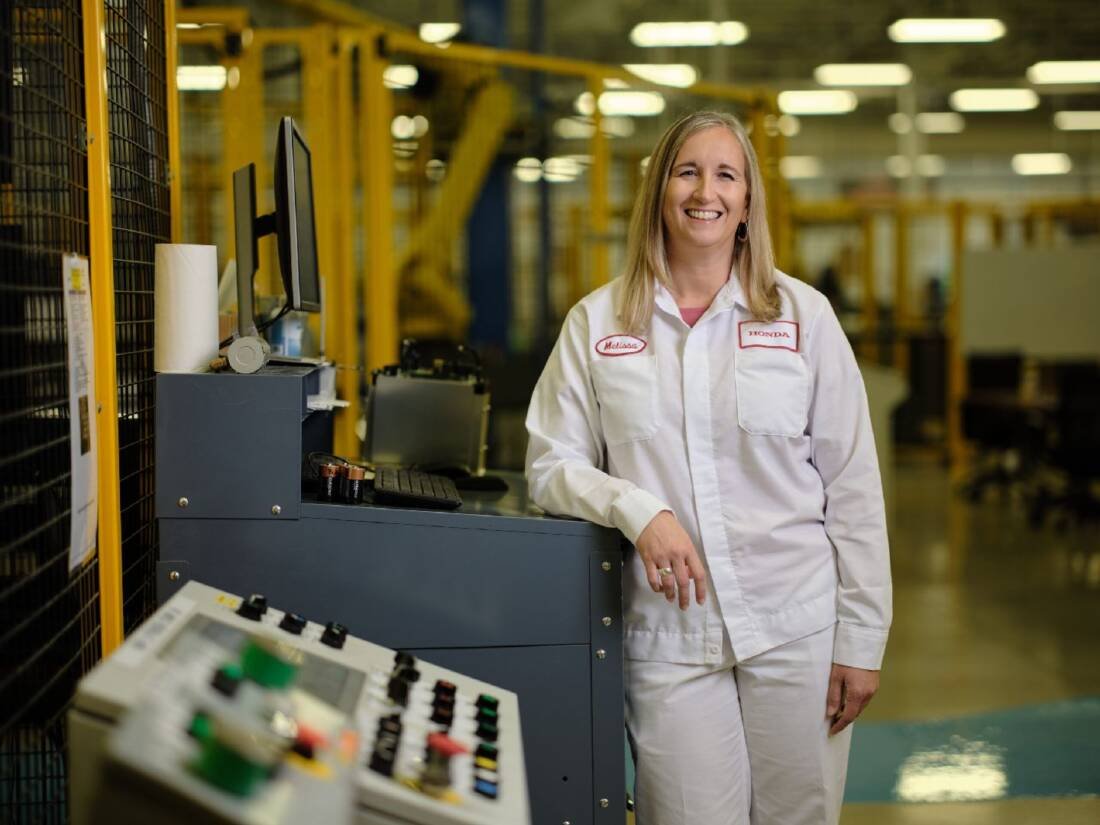
As a leader of technical development at Honda, I’m looking forward to this challenge. I started my career at Honda on the manufacturing floor over 25 years ago, working as a new model engineer on all aspects of preparing a new model for mass production. I then took on a role focused on helping our technicians learn how to maintain the equipment used to produce them. So, I bring a unique perspective to my role and a passion to support our people that will enable them to take advantage of the opportunities ahead.
While our transition to electrification will happen gradually over the next two decades, we are shoring up the training and development resources now to prepare our associates for this new era. We have been making proactive investments in workforce development at all levels to meet the challenges of the 21st century of manufacturing and we are committed to supporting our associates to develop the skills they will need for the future.
That’s one of the roles of the technical development
That’s one of the roles of the technical development centers we created several years ago. We wanted to ensure our maintenance technicians and production associates are properly equipped to tackle the challenges of a changing manufacturing environment. It is our job to understand the specific training needs and determine how best to deliver them. This includes self-paced instruction, lab work, hands-on training, web-based learning, and even utilizing virtual tools for training.
Another critical approach is cross training our associates in multiple manufacturing disciplines making them more proficient in their area of responsibility, which is why we offer a standard program that provides a holistic view of manufacturing. As one example, an associate who is mechanically inclined can have exposure to electrical concepts.
At the same time, we recognize that our future success will rely on the next generation, and for that, we need an educated and skilled workforce to produce the high-quality products our customers expect from Honda. So, we have programs supporting STEM education from elementary schools to community colleges and universities.
We’re also reaching further upstream in the talent pipeline to open younger minds to careers in manufacturing. We need to make students, as well as their teachers and parents, aware that there are great opportunities available in manufacturing — good paying jobs in a high-tech environment that are both challenging and rewarding.
One of the ways Honda is working to inspire and attract the next generation is by participating in Manufacturing Day, a national initiative that showcases modern manufacturing and highlights the exciting career opportunities available in our industry.
Workshops will remain available for viewing throughout the month of October
Honda associates at our manufacturing plants in Ohio, Georgia, Indiana, Alabama, North Carolina and South Carolina are hosting 10 virtual workshops where students can choose their own path to learn how Honda uses robotics and virtual reality for production, or go behind the scenes to see how products are built at our U.S. plants, and participate in live question-and-answer sessions with Honda manufacturing associates. These workshops will remain available for viewing throughout the month of October
We also are excited to partner with the National Association of Manufacturers (NAM) on a new traveling exhibit called. This mobile experience is a first-of-its-kind tour showcasing the exciting, high-tech reality of modern manufacturing. Creators Wanted Tour Live launches Oct. 4 in Columbus, Ohio and will travel across the country to showcase the exciting possibilities in manufacturing careers.
Perhaps even more than when I made the decision to join Honda over a quarter century ago, a career in manufacturing is an exciting opportunity to help define the future of mobility. So, as we enter this new electrified era, let’s provide the training and resources our current workforce needs to adapt to the challenges of a changing manufacturing environment. And let’s invest in education to prepare young people to meet the challenges of the 21st century of manufacturing. In short, let’s invest in people.