Mercedes-Benz Unveils Strategic Pillars
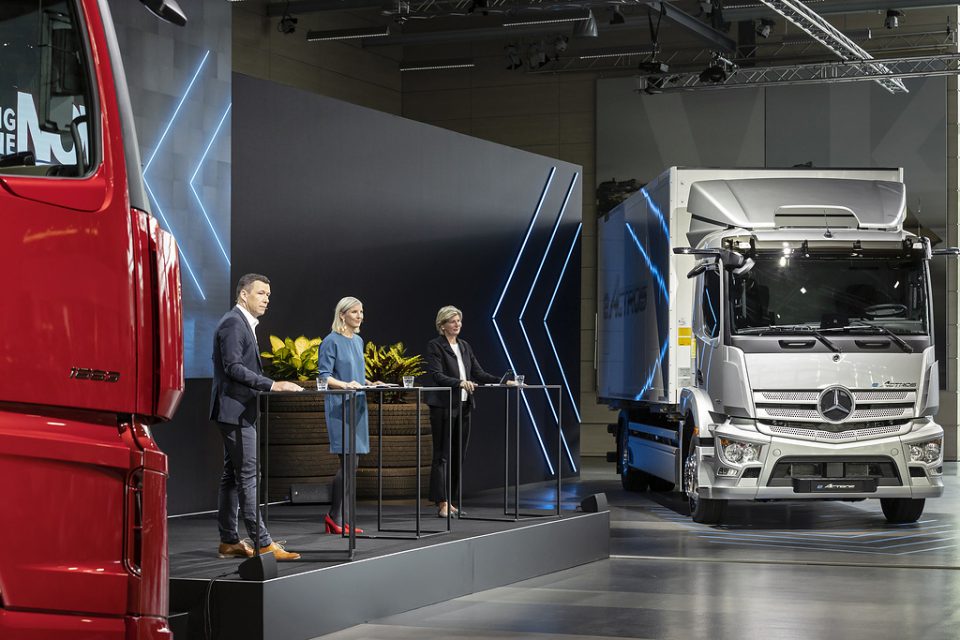
In 2030, we want more than half of our new vehicles sold in Europe to be locally emission-free», stated Karin Rådström, Member of the Board of Management at Daimler Truck AG and responsible for Mercedes-Benz Trucks. «To make that happen, there is no one-size-fits-all, no silver bullet. In line with the different use cases of our customers, we follow a dual electrification strategy based on battery- and fuel cell-electric trucks

Mercedes-Benz electric and hydrogen strategy
Mercedes-Benz Trucks aims at making the shift e-moblity as smooth as possible. The final goal as for the truck sector is to have only emission-free vehicles in some given markets by 2039, however something will happen before. «In 2030, we want more than half of our new vehicles sold in Europe to be locally emission-free», stated Karin Rådström, Member of the Board of Management at Daimler Truck AG and responsible for Mercedes-Benz Trucks. «To make that happen, there is no one-size-fits-all, no silver bullet. In line with the different use cases of our customers, we follow a dual electrification strategy based on battery- and fuel cell-electric trucks. But there is more action needed – in terms of infrastructure as well as a reliable regulatory framework».
As for infrastructure, Rådström also mentioned the partnership with Volvo and Traton for building high-performance charging stations all over Europe, as well as the collaboration with shell for a hydrogen-ready European corridor between Hamburg, Cologne and Rotterdam. We also asked her about the hot issue of electrical components shortage: «It’s a crucial issue indeed – she answered – and we’re constantly focused on finding solutions. We coped with the problem quite well in Q1 and Q2 and we’re confident for the near future. We are also working on making our production even more integrated and flexible».
A confirmation for the dual strategy
Together with Andreas von Wallfeld, Head of Marketing, Sales & Services, Karin Rådström confirmed the so-called dual strategy for managing energy transition. «We see BEV trucks for lighter loads and distances, and we believe in hydrogen (apparently, fuel cell more than hydrogen-powered ICEs, ed) for long-haul trucks with heavier loads», they said. There will be no space for CNG- or LNG-powered trucks in the Mercedes vision. «We don’t want to neglect the importance of diesel for the current market requirements, that’s why we keep on working to make ICEs increasingly clean. We do believe that in 2030 at least half of the trucks will still be diesel».
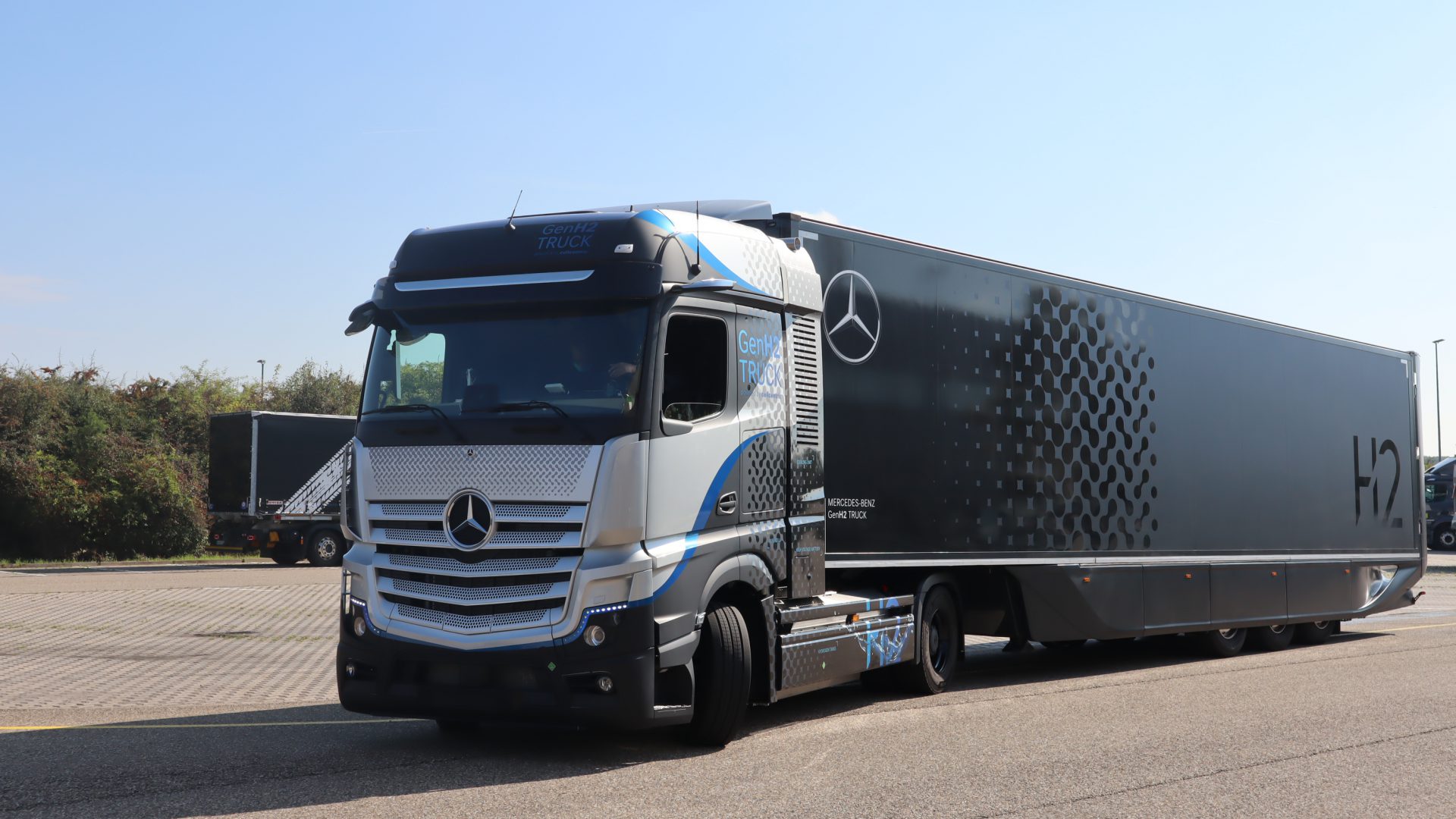
Talking about hydrogen, then, there’s a roadmap for the GenH2 Truck powered by fuel cells. According to Mercedes-Benz top management, customer trials are foreseen by 2023, while serial production is expected to start by 2027. Nevertheless, in the Wörth site tests are currently on-the-go, either on test rigs or on road. In this regards, the collaboration with cellcentric for fuel cell supply is crucial for understanding the technology and its potential for long-haul trucks.
eActros and eEconic: the roadmap
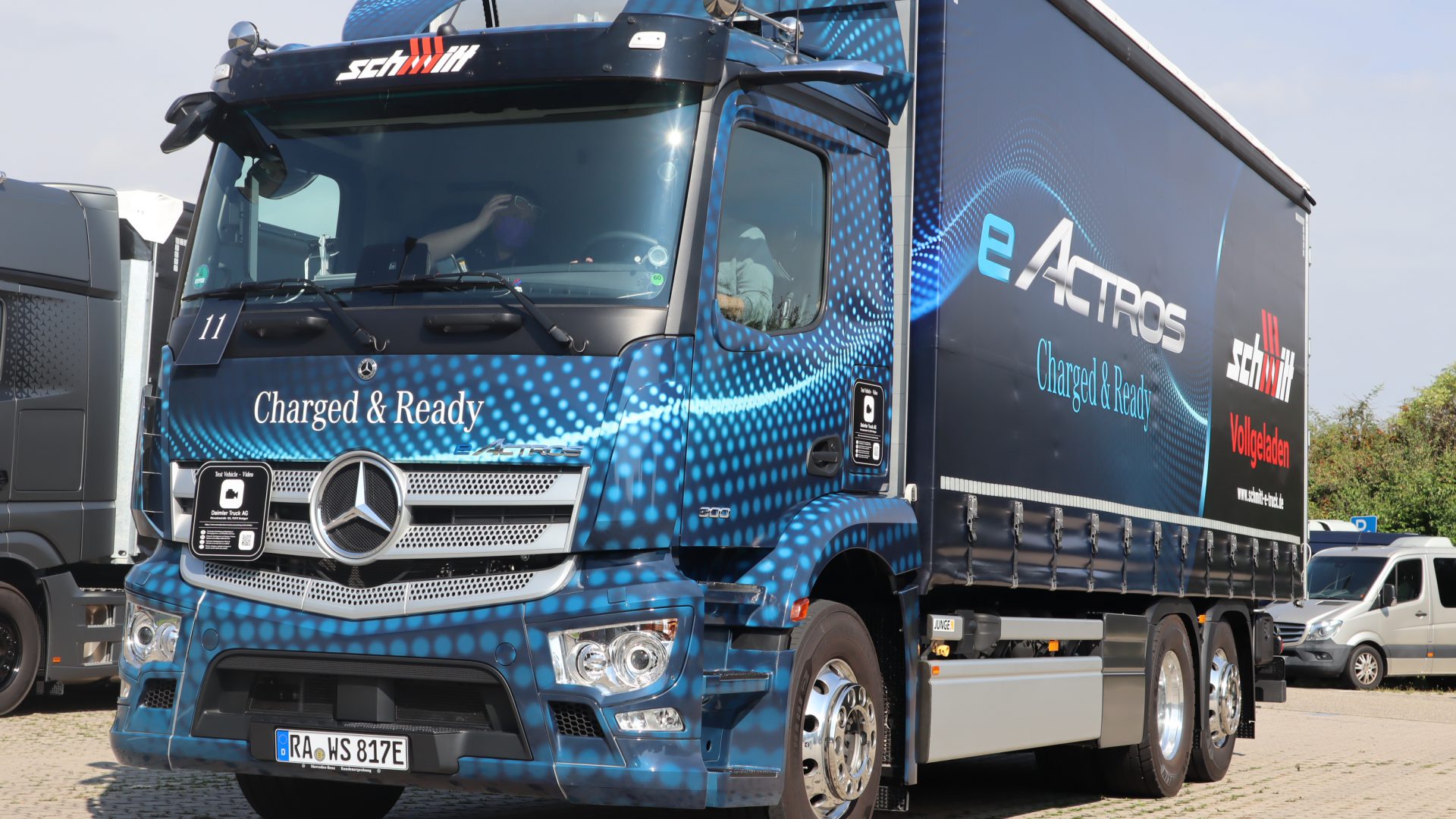
Let’s make a step back and talk about electric trucks. The eActros distribution truck will be produced since the beginning of October in Wörth, while the long-haul version, with 500 km autonomy will be ready in 2024. At the technological heart of the eActros is the drive unit with two integrated electric motors along with a two-speed transmission. Both motors provide for impressive ride comfort and great vehicle dynamics, while the quiet and emission-free electric drive means the truck can also be used for night deliveries and entry into inner cities with driving bans for diesel vehicles. Depending on the version, the eActros draws its power from three or four battery packs – each with a capacity of around 105 kWh. The maximum capacity of 420 kWh enables ranges of up to 400 kilometres to be achieved. The eActros can be charged with up to 160 kW: the three battery packs need a little over an hour to charge from 20 to 80 per cent at a normal DC rapid charging point with a charging current of 400 A.
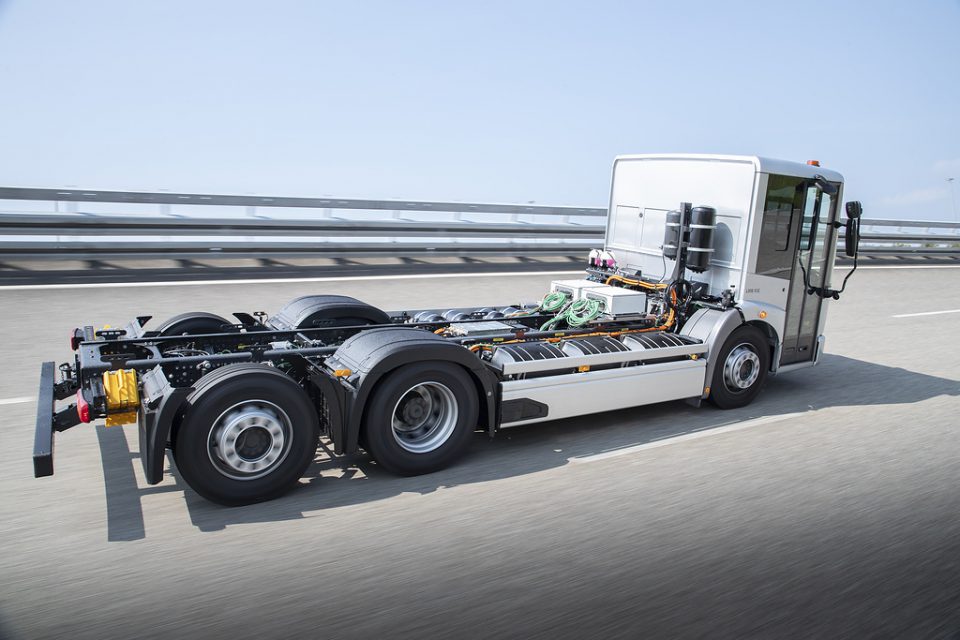
The series eEconic (pictured below) is scheduled for the second half of 2022. Intensive testing is still underway at present, after which the vehicle will move on to practical trials with customers. The key technical specifications of the eEconic are largely identical to those of the eActros. The eEconic as a waste collection is designed to cover the vast majority of typical waste collection routes operated by an Econic in a single shift without intermediary charging. The electric drivetrain enables a level cab floor to be implemented – this facilitates moving through the cab and is particularly advantageous when the driver wishes to leave the vehicle through the folding door on the co-driver’s side, well out of the way of the traffic.